Peru
Useful Information
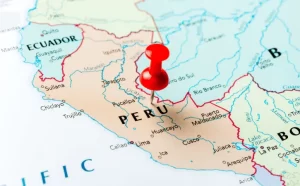
The Republic of Peru is located in the western region of South America. It borders Ecuador and Colombia to the north; Brazil to the east; Bolivia to the southeast; Chile to the south; and the Pacific Ocean to the west. It covers an area of 1.28 million km² and has a population of approximately 34.3 million inhabitants.
It is an extremely biodiverse country, with habitats as different as the arid coastal plains along the Pacific Ocean in the west, the Andes Mountains stretching vertically from the north to the southeast of the country, and the tropical Amazon Basin rainforest in the east.
The Peruvian territory was home to several ancient cultures, ranging from the Norte Chico civilization of around 2500 BC, the oldest civilization in the Americas, to the Inca Empire, the largest and most sophisticated state in pre-Columbian America. The Spanish Empire conquered the region in the 16th century and established a Viceroyalty with its capital in Lima. Peru formally proclaimed independence in 1821.
The Peruvian economy stands out in South America for its macroeconomic stability, ranking among the fastest-growing economies in the region and maintaining one of the lowest inflation rates. Its economic activities include, among others, trade, tourism, finance, transportation, mining and hydrocarbons, agriculture, livestock farming, and fishing.
Peru is the fourth most populous country in South America and it has a multiethnic population. The main spoken language is Spanish, although a significant number of Peruvians speak Quechua, Aymara or other native languages. This mixture of cultural traditions has resulted in a wide diversity of expressions in fields such as art, cuisine, literature, and music.
Lima
History of the city
As the Spanish Crown had named Pizarro governor of the lands he conquered, he chose the Rímac Valley to found his capital on January 18, 1535, as Ciudad de los Reyes. The establishment of the viceroyalty transformed the city into the main political and administrative center of South America. During this period, significant churches, monasteries, mansions and balconies were built. The arrival of modernity did not transform the historic center, which was recognized as a World Heritage Site by the Unesco.
Lima is located on mostly flat terrain in the central coastal region of the country within the valleys of the Chillón, Rímac and Lurín rivers, overlooking the Pacific Ocean. The urban area covers about 800 km² (310 sq mi) and has a coastline that extends for 80 km.
Lima is home to approximately 10.09 million people. The population is made up of a complex melting pot of races and ethnic groups. The largest ethnic group is made up of Mestizos, people of mixed Indigenous American and European ancestry. The second-largest group consists of Peruvians of European descent.
During the 20th and 21st centuries, the city underwent significant modernization and urban expansion, becoming home to nearly one-third of Peru’s population and evolving into a cultural melting pot distinguished by its traditions, festivals, music, and cuisine.
Climate
Lima has a mild climate, without excessive tropical heat or extreme cold. The average annual temperature ranges from 17.5 °C to 19 °C (63.5 °F to 66.2 °F), with summer highs reaching around 29 °C (84 °F). During the spring months (October and November), temperatures are moderate, ranging between 17 °C and 23 °C (62.6 °F to 73.4 °F).
Appropriate clothing
It is advisable to pack clothes for layering and a warm coat for night-time.
Electricity
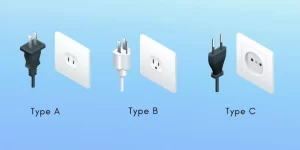
Electricity in Peru operates on a 220-volt current and a 60-Hertz frequency. There are two types of electrical outlets. One accepts two-pronged plugs with flat, parallel blades (Type A), while the other takes plugs with two round prongs (Type C). Electrical outputs are often designed to incorporate both plug types.
Currency
The official currency of Peru is the Peruvian sol, which is considered one of the most stable and strongest currencies in Latin America, maintaining considerable strength against the U.S. dollar throughout this century.
The US dollar is the most commonly accepted foreign currency. It can be used to pay in most shops, supermarkets, restaurants and hotels.
Credit cards – ATMs
All well-known international credit cards are accepted nearly everywhere in Lima. You can pay with your card in hotels, restaurants, shops and supermarkets. There are plenty of ATMs in Lima. However, it is advisable to use those located inside buildings or banks.
Tipping
In Peru, tipping is not mandatory, but it is a common and highly appreciated practice in the tourism and hospitality sectors. In restaurants and bars, it is customary to leave between 5% and 10% of the total bill if service is not included.
Entering the country
To enter Peru, it is indispensable to have a six-month valid passport. Citizens of Colombia, Bolivia, Ecuador, Argentina, Brazil, Chile, Paraguay, and Uruguay traveling to Peru for tourism purposes may enter the country carrying only their physical national identity card (ID). Immigration authorities may also ask for proof of onward travel (showing the intention to leave Peru), accommodation reservations or an invitation letter, and evidence of financial solvency to cover trip expenses.
Visa
Specific requirements depend on the traveler’s nationality. It is recommended to check entry and visa requirements with the Peruvian embassy or consulate in each country before traveling to Lima.
📋 For further information:
- National Superintendence of Migration of Peru: Essential information for tourists in Peru
*Note*
We strongly recommend checking entry requirements well in advance. PASA is not responsible for the visa application process of attendees.
Vaccination
Currently, Peru does not require any mandatory vaccinations for tourists to enter the country.
Jorge Chávez International Airport
The Jorge Chávez International Airport is located in Callao, about 10 km (6 miles) from Lima’s city center. The airport is one of the most modern ones in Latin America. Thanks to its strategic geographic location, it became a major hub for connecting international flights between the Americas.
The trip from the airport to the Miraflores district can take approximately 40 minutes, although this time may be longer during peak traffic hours.
Rental cars
Major car rental companies operate in Lima and are available at Jorge Chávez Airport: Avis, Budget Car Rental Peru, Hertz, Alamo and Dollar Rent a Car.
Taxis
Upon arriving in Lima, it is advisable to use only official taxis operating inside the airport. The easiest way to get around the city is by requesting a ride through a ride-hailing app such as Uber or Cabify. These options are generally safer alternatives to traditional taxis, which usually do not use meters and instead set fares based on distance and traffic. The safest option is to call a registered taxi company or request a taxi through your hotel.
Places to visit in Lima
Plaza de Armas
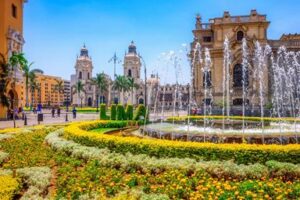
Also called Plaza Mayor, it is the founding center of Lima and its main public square. The square is surrounded by the Cathedral, the Archbishop’s Palace, the Casa del Oidor, and the Government Palace, the president’s official residence.
Leading from Plaza de Armas to Plaza San Martín, the pedestrian-only Jirón de la Unión is today a mix of old and new buildings housing restaurants and shops. Here the visitor will find La Merced church and the Casa de Aliaga, one of the oldest and best-preserved colonial mansions in South America.
The Cathedral
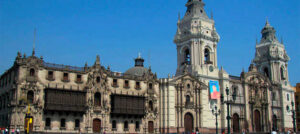
Lima’s Cathedral dominates the east side of the Plaza de Armas. Construction began on the original cathedral in 1535, and it was enlarged in 1564, based on the design of the cathedral in Seville, Spain. Its architectural design is primarily Renaissance, while its façades and towers reflect strong Colonial Baroque and Neoclassical influences. It was damaged by the big quake of 1746 but was quickly rebuilt to its present appearance.
Convent of San Francisco
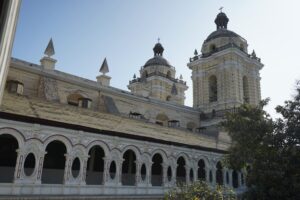
San Francisco church and its monastery are part of the historic center and most famous for their catacombs. The world-renowned library, on the upper level, has thousands of antique books, and the monastery has an impressive collection of religious art.
Church and Monastery of Santo Domingo
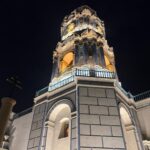
Built on land bestowed by Pizarro upon the Dominican Order, its construction commenced in 1540. The Convent of Santo Domingo holds a prominent place in Peru’s history and culture. Its premises hosted the first classes of what is now known as the National University of San Marcos. Despite the damage caused by earthquakes over the centuries, the convent’s architectural design has been preserved, reflecting the resilience and historical significance of this landmark.
Miraflores district
On cliffs above the ocean, just south of central Lima, Miraflores is a neighborhood of modern glass-and-steel commercial buildings mixed with some fine old colonial residences and lots of green space. Visitors can find here smart shops and restaurants serving the “New Peruvian” cuisine that is drawing worldwide attention in culinary circles.
📍 Event venue: The XVII International Meeting and XXII Technical Seminar will be held at the Hilton Lima Miraflores Hotel, in the heart of this district.
Huaca Pucllana
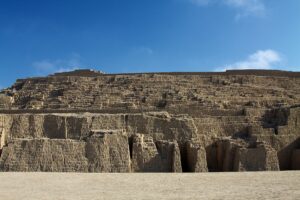
This archaeological site, located in Miraflores, belongs to a pre-Inca civilization that flourished between 200 and 700 BC. Rising to a maximum height of 25 meters, the complex consists of a series of plazas, courtyards, and structures that once served as an important ceremonial center.
Museums
Archaeology, Anthropology, and History Museum
It explores the history of Peru from prehistoric times to the colonial era. The variety of pieces displayed is impressive, with priceless examples of ceramics, figural stone carvings, obelisks, mummies, jewelry, tapestries, and gold and metal work.
Larco Museum
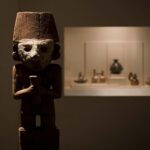
This museum, located in the district of Pueblo Libre, occupies an 18th-century colonial residence set amid beautiful gardens. It houses an extraordinary collection of pre-Columbian art, with around 45,000 archaeological pieces. This inspiring space offers visitors the opportunity to explore and gain a deeper understanding of the fascinating history of ancient Peru.
Art Museum – MALI
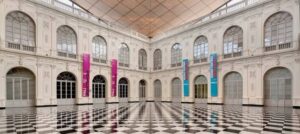
Housed in the Palacio de la Exposición, one of the finest examples of 19th-century iron architecture, the museum boasts the most extensive and representative art collection in the region, with more than 17,000 pieces. It includes a large selection of pre-Columbian textiles and ceramics, pictures and furniture from Colonial and Republican times and an important collection of paintings and photographic works.
Other attractions
Other places worth visiting in Lima are the San Francisco Museum and Convent, the Iglesia de las Nazarenas, the Magic Water tour, the Cruz del Viajero, and the Barranco and Pueblo Libre districts.
Gastronomy
Lima’s cuisine is renowned for its extraordinary fusion of Indigenous, African, Asian, and European influences, earning the city a well-deserved place among the world’s leading culinary destinations. Its most iconic dishes include ceviche, lomo saltado and causa limeña.
🛍️ Shopping in Lima
Peru’s capital city has the best and largest malls of the country. Some of them are:
🏬 Larcomar Shopping Center
Miraflores district. A shopping center built into the cliffs, overlooking the Pacific Ocean, with shops, restaurants and entertainment.
🏢 Jockey Plaza Shopping Center
Santiago de Surco district. One of the largest malls in Lima, with a wide variety of stores and international brands.
🏪 Real Plaza Salaverry
Jesús María district. A modern shopping center with stores, a food court, cinemas and family entertainment.
Information about the event
Dress code
For the social meetings, elegant casual clothes are recommended, no jeans. No tie is necessary.
Punctuality
Punctuality is indispensable and will be welcomed for all programmed events.
Badges
You will be requested to show your identification card / badge at all the social and academic events to be allowed into the meeting rooms.
Don’t forget to bring with you
- Prescribed glasses
- Personal medicines
- Comfortable and smart shoes
- A warm jacket
Luggage
We suggest that you identify your luggage with bag tags with name and surname, and hotel.
Insurance
The organizers assume no responsibility for medical, travel, robbery or personal insurance. In case of needing medical attention at the hotel, please call Reception. Hotels may have medical insurance.

